Laser Hair Removal: Understanding the Process, Costs, and Care for Lasting Results

By Dr. Nikia Burns, New Beauty Medical Aesthetics
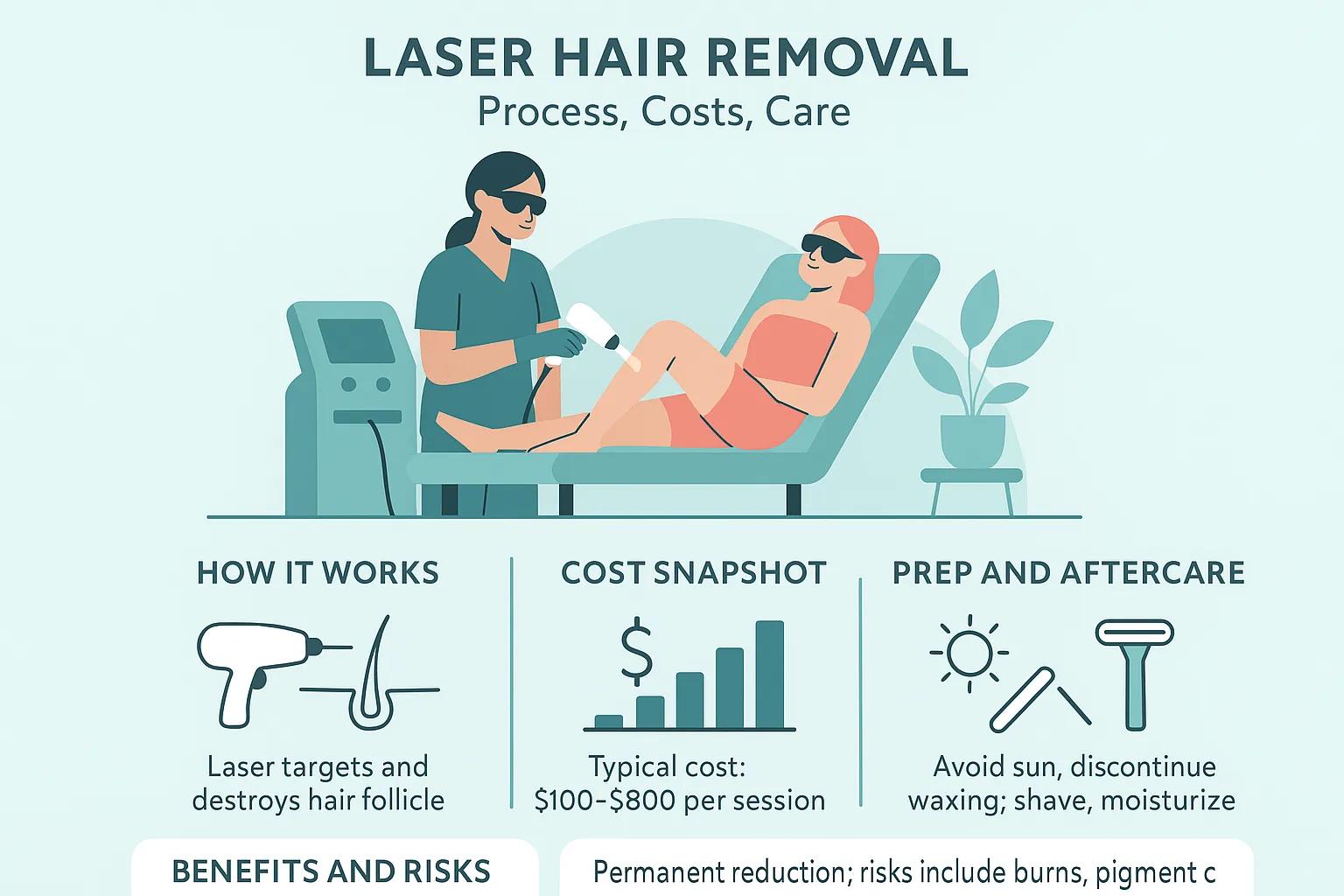
Laser hair removal offers long-term reduction by targeting follicles with focused lasers. Many choose it to avoid the time and skin irritation of shaving or waxing. This article outlines the process, typical costs, pre-treatment and aftercare steps, and the benefits and possible side effects so you can decide.
Clinical studies support the effectiveness and rising use of multiple laser systems for meaningful hair reduction.
Efficacy of Laser Hair Removal: A Meta-Analysis
This meta-analysis evaluated hair reduction effectiveness across several laser systems, including alexandrite, diode, Nd:YAG and intense pulsed light (IPL), for laser hair removal.
Efficacy of laser in hair removal: a network meta-analysis, DZ Lin, 2023
Overview of the Process:
Treatment starts with a consultation to assess skin and hair and create a plan. The area is usually shaved so the laser can reach follicles. During a session, a laser pulse is absorbed by hair pigment and converted to heat, which damages follicles and reduces growth. Your provider will explain aftercare to support healing and limit side effects.
Laser Hair Removal Costs at New Beauty Medical Aesthetics
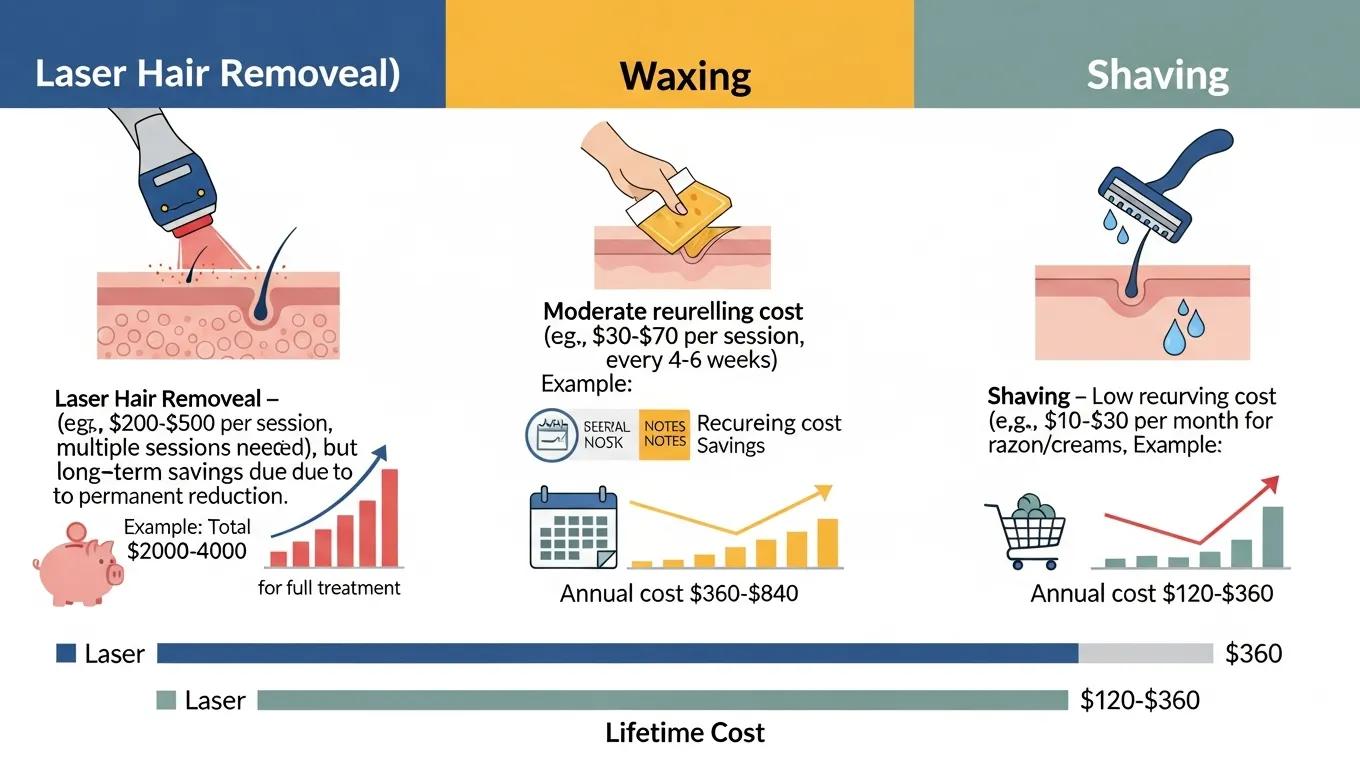
Prices depend on the treatment area, number of sessions and provider. Upfront fees are often higher than a single wax or shave, but long-term hair reduction can lower overall costs.
Cost Comparison with Traditional Methods
The table illustrates how laser hair removal can be more economical over time, especially compared with frequent waxing or shaving.
What Is the Laser Hair Removal Process and How Does It Work?
Lasers emit wavelengths absorbed by melanin in hair; the light becomes heat that damages the follicle and limits future growth. Effectiveness varies with hair colour, skin type and area treated. Multiple sessions are required because hair grows in cycles and the laser targets actively growing hairs.
Peer-reviewed literature describes the mechanisms and long-term outcomes of laser hair removal, underscoring the technology’s capabilities.
Laser Hair Removal: Process, Efficacy & Types
Laser-assisted hair removal is currently the most efficient method for long-term hair reduction. Effective systems include ruby laser (694 nm), alexandrite laser (755 nm), diode laser (800 nm), intense pulsed light sources (590–1200 nm) and the neodymium:yttrium-aluminum-garnet (Nd:YAG) laser (1064 nm). These devices operate on the principle of selective photothermolysis, targeting melanin within hair follicles. Multiple treatments are necessary; studies commonly report 30–50% hair clearance six months after the final session. Patients with darker skin tones can be treated effectively with comparable morbidity to those with lighter skin tones.
Laser hair removal: guidelines for management, 2002
How Much Does Laser Hair Removal Cost in McMurray PA?
Local session prices in McMurray, PA generally vary by area and number of sessions. On average, clients pay about $250 per session; differences reflect provider experience, equipment and promotions.
What Are the Essential Pre-Treatment and Aftercare Guidelines?
- Avoid Sun Exposure: Limit sun exposure for at least two weeks before treatment to reduce complications.
- Shave the Area: Shave the treatment area about 24 hours before the session so the laser can target follicles effectively.
- Consultation: Attend a consultation to review medical history, medications and suitability for treatment.
Proper aftercare supports healing and reduces side effects.
- Moisturize: Apply a soothing lotion to keep the skin hydrated.
- Avoid Heat: Avoid hot showers, saunas or intense exercise for 24–48 hours after treatment.
- Sun Protection: Use sunscreen on treated areas to prevent UV-related complications.
What Are the Benefits and Possible Side Effects of Laser Hair Removal?

Laser hair removal offers benefits many patients value.
- Long-term Hair Reduction: Many clients see significant reduction after a series of treatments.
- Precision: The laser concentrates on follicles while sparing surrounding skin.
- Speed: Sessions are relatively quick, depending on the area.
Potential side effects include:
- Skin Irritation: Temporary redness or swelling may follow treatment.
- Pigment Changes: Changes in pigmentation can occur, more commonly with darker skin tones.
- Rare Complications: Blistering or scarring is uncommon but possible.
Long-term advantages of permanent hair reduction
Benefits extend beyond convenience. With treatment you can expect:
- Cost Savings: Reduced spending on razors, wax and other products over time.
- Reduced Skin Irritation: Fewer ingrown hairs and less irritation than some traditional methods.
- Improved Confidence: Many report higher confidence with smoother skin.
Common side effects and how to manage them safely
Laser hair removal is generally safe when performed by a qualified provider; know the common side effects and simple management steps.
- Redness and Swelling: These usually subside within hours; a cold compress can help.
- Itching: Over-the-counter antihistamines may relieve mild itching.
- Blistering: If blisters occur, keep the area clean and avoid picking; seek provider advice for severe symptoms.
Follow aftercare and consult your provider to minimise risk and achieve the best outcome.
Frequently Asked Questions
1. How many sessions are typically required for effective laser hair removal?
Most people need multiple sessions—commonly 4–6 treatments spaced 4–6 weeks apart—because hair grows in cycles. A consultation provides a personalised plan.
2. Is laser hair removal safe for all skin types?
It can be safe across many skin types; effectiveness and risk vary. Nd:YAG lasers are often used for darker skin due to their longer wavelength. A trained provider will recommend the safest device and settings.
3. What should I expect during the consultation for laser hair removal?
The provider will assess skin and hair, review medical history and goals, explain likely outcomes, and cover pre- and post-care and potential risks. Use the visit to ask questions.
4. Can laser hair removal be performed on any body part?
Yes. Common areas include the face, legs, arms, underarms, bikini area and back. Sensitive zones may need specialised settings for comfort and safety.
5. How long do the results of laser hair removal last?
Results are often long-lasting, with many patients seeing months or years of reduced growth. Hormonal changes can cause regrowth; maintenance sessions may be recommended.
6. Are there any contraindications for laser hair removal?
Yes. Active skin infections, certain skin conditions (for example eczema or psoriasis) and pregnancy are common contraindications. Some photosensitising medications also pose risks. Disclose full medical history and medications.
7. What are the differences between various laser types used in hair removal?
Types differ by wavelength and suitability. Alexandrite often suits lighter skin and finer hair, Nd:YAG is preferred for darker skin, and diode lasers work across a range of types. Discuss options with your provider.